
History ·
Aviation's Leap in WWI: How Airplanes Evolved During the War
From flimsy reconnaissance kites to synchronized-gun fighters, bombers, and the first aircraft carrier — four years that built modern military aviation.
By The Captain
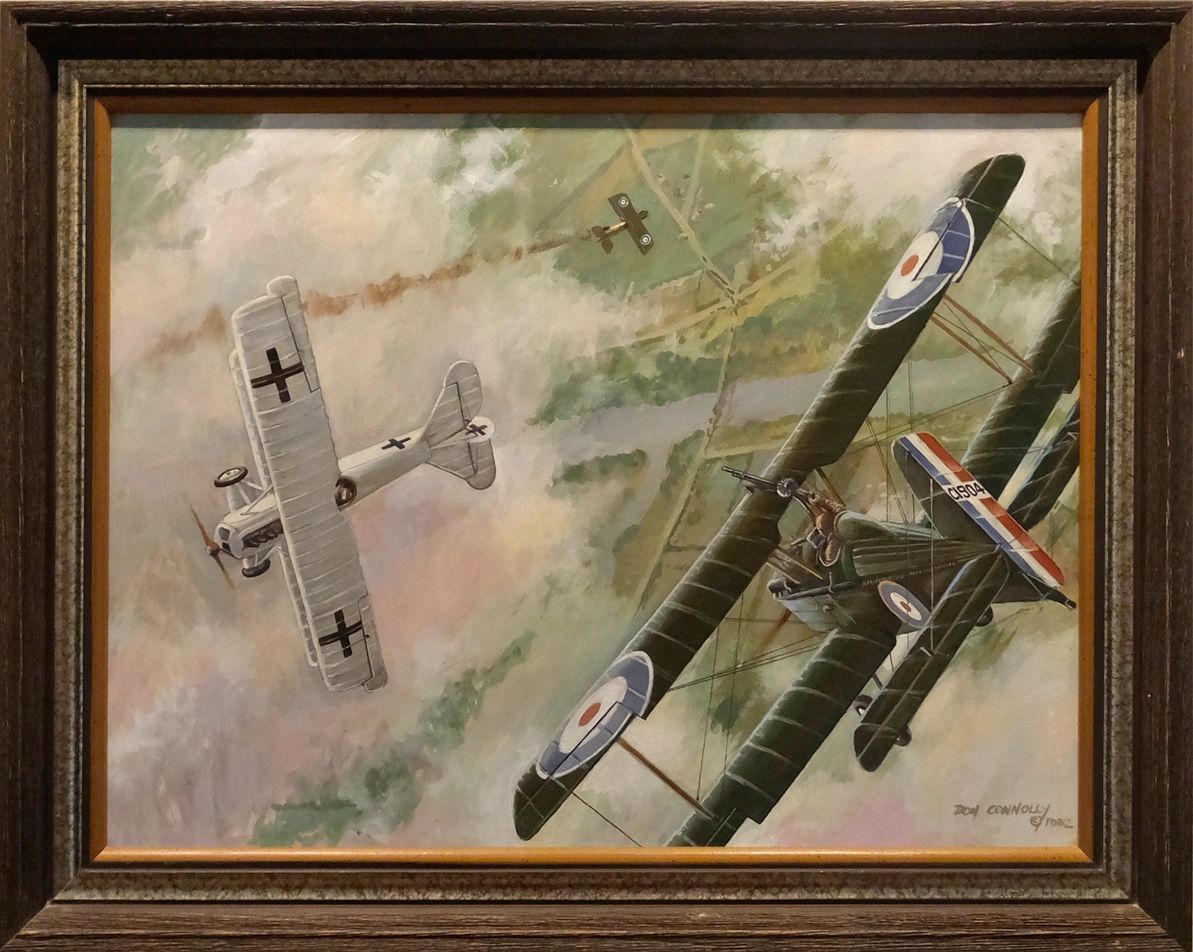
By 1918, the airplane had evolved from a flimsy simple machine used for reconnaissance into a sophisticated instrument of war with multiple uses. It would revolutionize the strategies of war and enhance the tactics involved, as well as the application of aviation for both military and civilian uses through today.
The Facts
When the First World War broke out in 1914, aviation had only been in existence for eleven years. However, this is where aviation would come into its own. In the beginning, the airplane was used for reconnaissance, observation, and artillery spotting. To counter such activities, they developed a pursuit plane, which turned into the fighter plane to chase down enemy observation and recon aircraft as well as to protect their own. The Great War would also see Zeppelins used as observation platforms as well as dedicated bomber aircraft. In fact, Germany would launch several bombing raids into Great Britain.
At first, Britain did not have the countermeasures necessary to defend against the airships. Many buildings were damaged and as many as 1,500 civilians were killed in German raids between 1914 and 1917. Germany suspended bombing missions in 1917 as Great Britain’s countermeasures had caught up to the problem. To counter the threat, they developed means to monitor the radio traffic of the Zeppelins as they transmitted over the North Sea, then used spotlights to illuminate the Zeppelins and anti-aircraft cannon with exploding shells to bring them down. Being that these airships were filled with hydrogen to fly them, it must have been a spectacular light show.
Airframes and Engines
The aircraft of World War I were flimsy machines that were dangerous to fly normally, let alone in combat. Each one was basically hand built and lacked the standards that are regulated into aircraft design and manufacturing today. Each aircraft had at least one wing, but usually two, or in the case of the Fokker Dr.I, three. They were built from aircraft-grade spruce wood and covered with Grade A cotton. Once the cotton was laid on the aircraft, it was stitched into place and then a material colloquially known as “dope” would be applied to the fabric. Once the “dope” is applied, they will take a hot iron and use it to “iron” the fabric, causing it to snap taut. This process is pretty cool to do as you can actually hear the fabric snap and it becomes as taut as a drum. To stabilize and sturdy the structure of the wings, struts are installed in between the wings and then cables are used as dynamic support. A series of cables and pulleys are used to control the flight surfaces.
These flying machines were powered by different piston engines. Most of the Allied aircraft in the war were powered by the French Le Rhône rotary engine. What was fascinating about this engine was that the whole engine spun with the propeller around the crankshaft, which was fixed. This was a design feature to solve the overheating problem that the engine suffered. Of course, because the engine and propeller spun around a fixed crankshaft, it created an enormous amount of torque creating a major instability. This made it extra dangerous as the high torque would cause the aircraft to roll in the direction the engine turned which could cause the airplane to lose control with a pilot not on top of the airplane. Another fun fact of this engine: it was lubricated with castor oil. As the engine operated, it spewed the oil out of the case. This is why pilots wore the goggles and silk scarves that defined the era — to not ingest or become blinded by the castor oil.
The Le Rhône engine was found in the iconic airplanes of the time such as the Sopwith Camel, the Nieuport 17, and the SPAD XIII. These aircraft were the premier Allied fighters of the day, which were able to compete with the magnificent flying machines of the Germans designed by Anthony Hermann Fokker.
The Synchronizer Gear
A Dutch aircraft designer, Anthony Fokker probably designed some of the best aircraft during the war. He is also responsible for revolutionizing air combat by developing the synchronizer gear. In the beginning of the war, air-to-air combat was pilots pulling out a handgun or observers firing rifles and machine guns at each other. This was not practical as they would have to fly away from each other to get a clear shot. The next step was to mount a machine gun on the front of the aircraft. This was great for the pusher aircraft (airplanes with the propeller in the rear), not so much for the tractor style (propeller in the front). It was not practical to fire the guns through the propellers as it would chew them up and be more hazardous to the pilot than their enemy.
Their first attempt to solve this problem was to attach metal strips on the blades, but this was not practical for many reasons. First, it exacerbated the problem as bullets would ricochet back at the pilot or the aircraft. Secondly, it added weight and reduced the aerodynamic performance of the propellers, causing a loss of aircraft power and speed. So in response to this dilemma, Anthony Fokker developed the synchro gear. Basically, it is a gear that inhibits the machine gun when the propeller blade passes in front of it. This invention changed combat aviation overnight and gave the Germans the advantage over the Allies for a 9-month period until the Allies came out with their version. This was known as the “Fokker Scourge” and would turn the 1915 war in the air into the same attritional morass that was experienced on the ground.
Knights of the Air
The pilots of these airplanes were a brave and adventurous group. One would have to be when climbing into these early flying machines. They did it without a parachute, in subzero temperatures, and the constant threat of being shot down by both enemy action and friendly fire. Many of them would become famous for their actions during the war as they were great for propaganda value. Considered Knights of the Air, these brave men were romanticized as well as envied by their peers in the trenches. They faced death every time they went up and lived it up when on the ground. Every side had their aces. The top German Ace was the feared Baron Manfred von Richthofen, with 80 kills. The British had Albert Ball with 44. Canada’s Ace Billy Bishop shot down 72 while South Africa’s Andrew Beauchamp had 54. Georges Guynemer of France earned 50 victories during the war, and Max Immelmann of Germany would be Germany’s first Ace. America’s Ace of Aces was Eddie Rickenbacker. There were many more, but these men became the heroes in a war that people could aspire to.
Analysis
Aviation development happened rapidly. In 1914’s early days, the airplane was only good for observation. By 1918, observation airplanes carried state-of-the-art cameras and were vital for gathering intel on the other side’s trenches. Radio communication also became better. Airframes became stronger and sturdier. Engines went from around 50–80 horsepower to engines almost reaching 300 horsepower. Airplanes became faster and with significantly longer ranges and ability to fly higher. From this came the bomber and the fighter. Great Britain pioneered the use of the airplane in hunting submarines and would design the first aircraft carrier, unknowingly changing naval warfare forever.
Aviation also added a romance and propaganda value in a dark and destructive war. It gave governments and media something to attach to that gave more of a positive view. This painted a much better picture aviators portrayed than the stories from the trenches. It would also excite the imaginations of people so that after the war, aviation could continue to grow through the flying circuses and air mail services that began commercial aviation.
Bibliography
“8 Celebrity Air Aces of the First World War.” Imperial War Museum.
Federal Aviation Administration (FAA). AC 43.13-1A/2B: Acceptable Methods, Techniques, and Practices of Aircraft Inspection and Repair. Washington, D.C.: U.S. Department of Transportation, 1998.
Hartzell Propellers. “Sync Gear: How World War I Fighters Avoided Damaging Their Own Propellers.” November 29, 2016.
National Air and Space Museum. Smithsonian Institution.
“The Zeppelin Raids.” The National Archives (UK).
Originally published at the live site .